
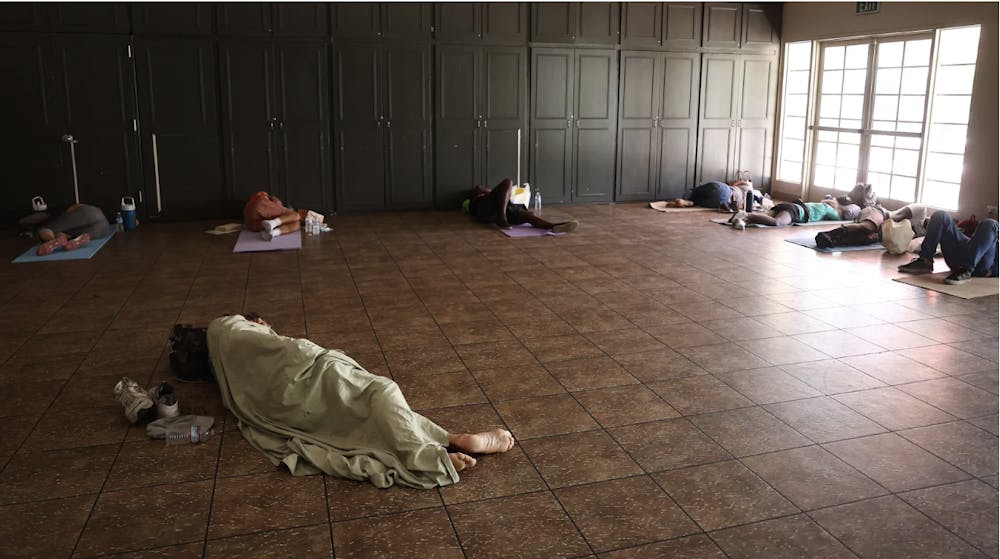
PHOENIX — After years of rising heat-related deaths in Maricopa County, fatalities declined in 2025 despite near-record heat.
The decline follows several years of rising fatalities tied to extreme heat in Maricopa County, which according to experts is one of the deadliest counties in the country for heat-related deaths. In 2025, the Maricopa County Department of Public Health recorded 427 heat-related fatalities, down 33% from 608 the year before.
In 2025, Phoenix had 122 days with heat exceeding 100 degrees Fahrenheit, making it the second-hottest year on record for Phoenix since record keeping began in 1896 . Despite the extreme heat, Maricopa County was able to slow the rise in fatalities through programs aimed at helping people experiencing homelessness.
“While the number of deaths remains unacceptably high, these intensified measures and an increase in investment have demonstrated meaningful progress toward reducing heat-related mortality, as one important metric of success,” said Patricia Solis, a sustainability professor at Arizona State University.
“You could basically think of the heat-associated deaths in two categories — those that happen outdoors and those that happen indoors," Solis said. "Among those happening outdoors, people experiencing homelessness make up, generally, year over year about half of the mortality rates, and they have been increasing dramatically over the previous decade until last year, when there had been a significant halt to that trend."
In 2025, 48% of heat-related deaths in Maricopa County were among people experiencing homelessness, even though they make up less than 0.2% of the county’s population.
Jessica Berg, chief program officer for the Society of St. Vincent de Paul, credited the reduction in fatalities to collaboration with the city of Phoenix.
"Last summer, in partnership with the city of Phoenix, we opened a heat relief shelter for more than 170 people overnight, and every summer we have our dining rooms open for extended hours," Berg said. "Our work shifts a little bit to absolutely making sure we're doing what we can to save lives and give people resources like water, food and air conditioning."
St. Vincent de Paul has opened up multiple heat-relief centers in Phoenix and other parts of Maricopa County.
Another factor is the addition of new homeless shelters and the expansion of existing ones. Scott Hall, deputy director for the Office of Homeless Solutions, said that in the past two to three years more than 1,200 new beds have been added to homeless shelters throughout Phoenix and other areas of Maricopa County.
"Over the last few years, we've set up operations to support people and mitigate the extreme heat that we experience in the city of Phoenix," he said. "We've also opened a 24/7 heat respite center for people to come and get out of the heat."
Even with those efforts, challenges persist, as many of these programs depended on funding from the American Rescue Plan Act, which was part of an economic recovery package enacted in 2021 during the COVID-19 pandemic. The funding has largely been exhausted, leading the state of Arizona and nonprofit organizations to turn to alternative funding sources.
Berg said St. Vincent de Paul did not rely heavily on that funding but is concerned about partner organizations.
"I feel confident we'll be okay, but we're only as strong as our generous community," Berg said. "It affects our partners, and when there are fewer resources available in the community, we certainly feel that as well."