
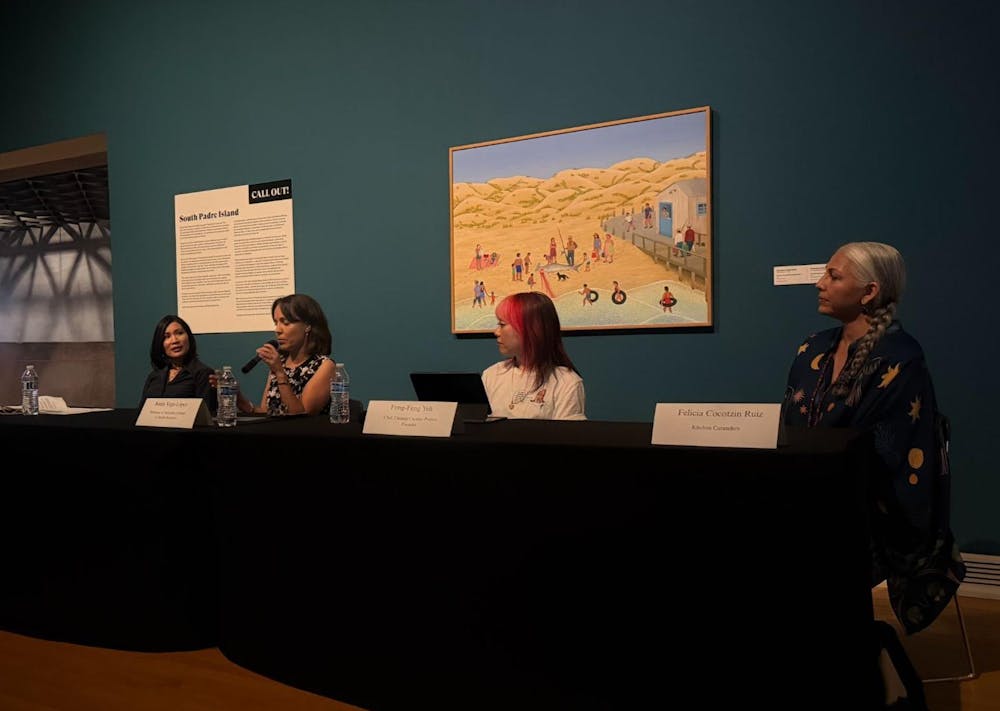
TEMPE, Ariz. - Cultural practitioners and scholars discussed the importance of food and its ties to culture, healing, community and medicine at a health panel Sunday afternoon at the Arizona State Art Museum.
The panel, La Mesa: Culture, Healing, and the Medicine of Food, took inspiration from Carmen Lomas Garza’s exhibit “Picturing the Familiar.” Garza is an artist who documents Mexican American life through her work.
“Tamalada” was an original artwork by Garza depicting a family making food together, which inspired the panelists as they described their own relationship with food and their community.
The panel, moderated by Jessica Lehmann, featured Sonia Vega-López, Feng-Feng Yeh and Felicia Cocotzin Ruiz.
“We all need to focus on all the wonderful reasons that we enjoy taking pleasure in our food,” Lehmann said to those in attendance. Lehmann is a registered dietitian and associate teaching professor in the College of Health Solutions at ASU.
Food is a part of one’s cultural identity and individual preferences, Lehmann said.
The panelists all shared their personal journeys to discovering the importance of food in their culture, and how it healed them and their community.
“Our natural diet is not our enemy,” Vega-López said.
Vega-López is a professor of nutrition and assistant dean of inclusive excellence in the College of Health Solutions at ASU. Born in Mexico City, Vega-López found her love for food while traveling in Mexico with her family.
The traditional practices of preparing and consuming cultural dishes can be good for one’s health, Vega-López said. Many Latin American countries gather for sobremesa, a practice of having deep conversations with their communities after meals, Vega-López said.
Vega-López has a meal with her kids at least once a day, she said. During this time, she is able to connect with them and her culture through sobremesa.
Traditional foods bring communities together, Yeh said. As a chef, Yeh has always had a passion for cooking and learning about how food connects people.
Yeh is a Chinese American who grew up in Tucson, Arizona. She learned about a traditional food from Tucson, Chinese chorizo, while visiting family.
The Chinese chorizo, made by Chinese and Mexican immigrants, was a food fusion highlighted by trust between the two communities due to racist covenants and redlining from 1881 to 1991, Yeh said.
Redlining is a discriminatory practice that involves denying residents services based on their race and ethnicity.
“It is a recipe for solidarity,” Yeh said. This discovery led to the Chinese Chorizo Project, which is a collaboration with the Tucson community to celebrate this forgotten food through festivals and donations.
Ruiz is Portuguese and Mexican. Born in South Phoenix, Ruiz has taken traditional meals and beliefs passed down to her into her adult life as a Kitchen Curandera.
A Curandera is a traditional healer. Ruiz earned the title from the trust her community placed in her and has been practicing for the last 33 years.
“To me, food is medicine,” Ruiz said.
At the beginning of her journey as a Curandera, Ruiz traveled throughout Arizona, sharing food with different indigenous communities. Through this process, Ruiz learned more about the relationship between food acting as a medicine and how it can connect a community.
With her experience, Ruiz now helps others on their journey to becoming Curanderas.
The panelists challenged the audience to see the importance in the food they consume. They reminded the audience to connect with their own cultural and traditional food, and to savor it with their community.