
PHOENIX--Artificial intelligence has taken the world by storm, and Arizona State University students are discovering where they fit in amid the age of AI.
In September, ASU announced an expanded collaboration with OpenAI, a company specializing in developing artificial intelligence, like their main AI chatbot, ChatGPT.
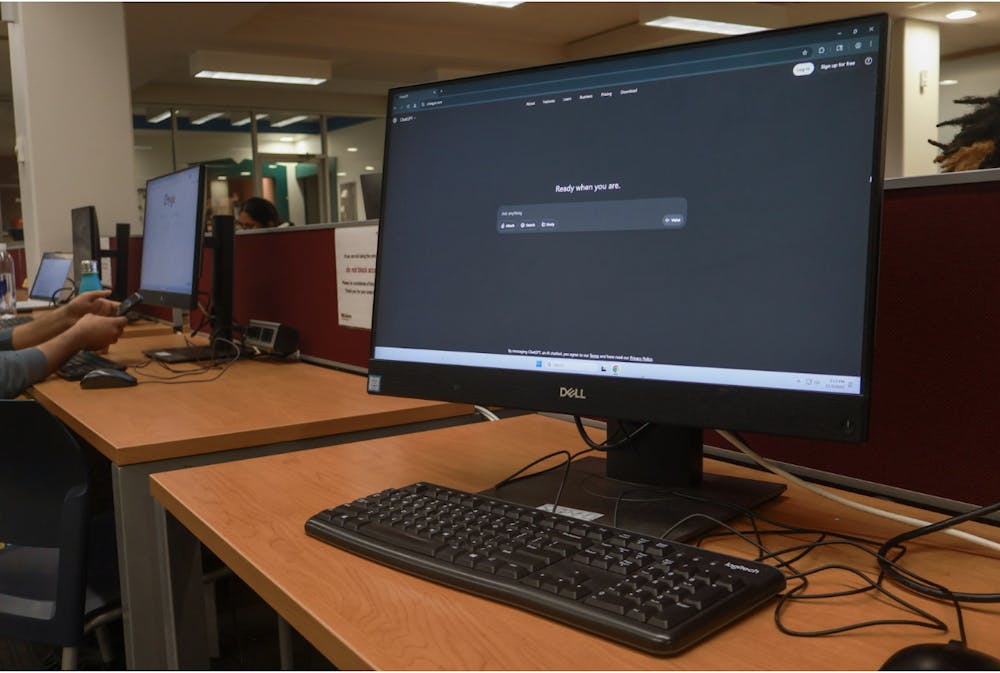
The collaboration between the two would allow all students and faculty to access ChatGPT-5, an advanced version of OpenAI’s signature chatbot, designed for businesses and educational institutions.
Students said they have elected to embrace the changes at their university, finding the chatbot’s convenience and straightforwardness useful.
One junior, Sebastian Melker-Cisneros, said he tends to use AI as a personal tutor because it helps him at times when no one else can.
“I find it very helpful as a private tutor of sorts when you're dealing with concepts that are completely unfamiliar to you, and it's like 10 p.m. or 12 a.m., just super late, can't contact a professor or get in touch with other students,” Melker-Cisneros said.
Melker-Cisneros said he started studying architecture at ASU, but later switched to Artificial Intelligence in Business, a move he said would give him a leg up on his peers.
“One thing that a lot of my professors are saying is that AI isn't going to replace your job, you don't have to worry about that,” Melker-Cisneros said. “You have to worry about your co-worker who can work with AI; he's gonna take your job.”
ASU was the first university that OpenAI had partnered with, and with its support, the collaboration is set to be one of the clear points of the corporation’s success.
As one of the industry’s leading faces, OpenAI has seen a jump from 100 million ChatGPT users in November 2023 to over 700 million users in November 2025, according to Semrush, a website that tracks web traffic and online performance.
As support for AI continues to grow with other universities following in ASU’s footsteps, both students and professors said they look for different ways to incorporate the technology into their classrooms.
While AI’s problem solving capabilities can be useful for some majors like in Melker-Cisneros’ case, but for professors within other majors, such as those in the arts, said they find the technology difficult.
Brent Webster, an English professor at ASU, said that many of his colleagues use artificial intelligence in their courses, but he finds students misusing AI-generated content at least twice a week in his classes.
“In years prior, students wrote their papers, you know, now they don't so much, so I have to kind of navigate that sterile prose,” Webster said.
Webster has found that one of his biggest weapons against AI is simply a conversation, and said he tries to talk to the students to find a balance between convenience and autonomy.
“Once I steer somebody in the right direction, it's usually not a problem,” Webster said. “It's tempting, I guess, to forfeit part of your instinct to something else.”
Webster’s solution seems to work for students across campus, even those not in his class.
Max Allen, a sophomore studying mass communications and media studies, said his experiences with AI have always been challenging, but he still values it as a tool for the future.
“I think it can get really distracting when it’s everywhere,” Allen said. ”But I do appreciate what ASU’s done to establish it as a tool to help us, instead of allowing us to be lost in this new world.”
ASU Students Find New Normal With University’s Collaboration
Similar Posts
- — How Local Artists View Phoenix’s New First Friday Pilot Program
- — Chicano Photographer Louis Carlos Bernal Preserves Culture Through Generations
- — Glendale Council Member Champions Issues Rooted in Personal Hardships
- — Maricopa Association of Governments Studies How to Improve Traffic
- — The Arizona State Fair Desolate During Opening Weeks Due to the Rocket High Prices This Year.