
Last week, we at The A-List were given the opportunity to talk to Ric Roman Waugh, director of the new action-drama film “Shelter” starring Jason Statham, as well as “Greenland 2: Migration,” which was released earlier in January.
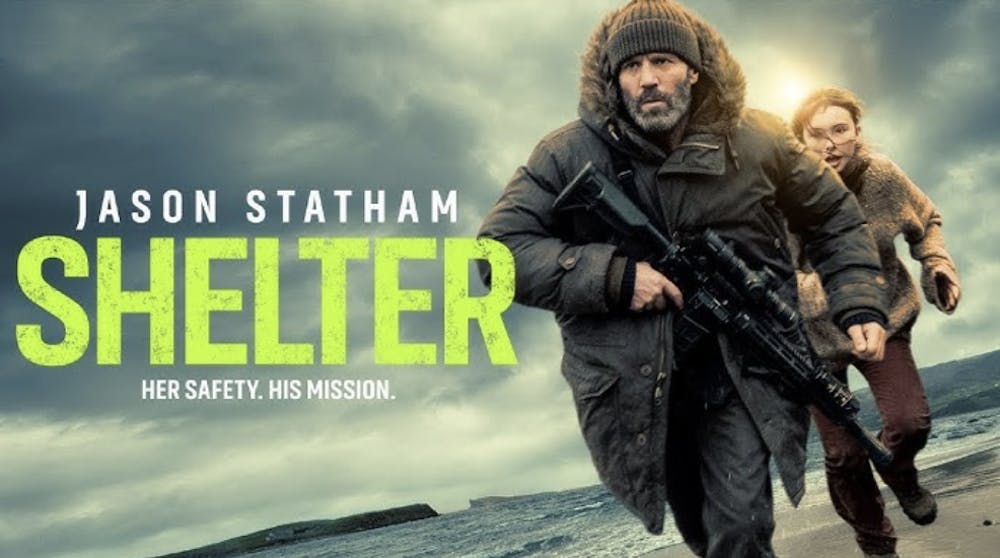
“Shelter” tells the story of a reclusive man who rescues a young girl and is forced out of isolation, leading him to protect her from the dangers of the life he left behind. “Shelter” releases in theaters on January 30, 2026.
We’d like to thank Allied Global Marketing for the opportunity to watch the film and interview Mr. Waugh, and of course, thank Ric Roman Waugh for sitting with us for this interview. With all that out of the way, here’s our conversation with Ric Roman Waugh!
Larisa - So to start off, you have both “Shelter” and “Greenland 2: Migration” coming out this month. How do you feel about having two theatrical releases in such a short time span, and why is it so important for you to stand by theater-first releases in this very streaming-forward society?
Ric Roman Waugh - One, I love the cinema. And I think that I'm a huge music fan, and I don't know about you, but there is something different about going to a concert and being in that environment, versus in the best sound system in your house, by yourself. We want to experience things socially and in a different way. And what's happened with the theater experience is where we went through a lot of gimmicks with 3D and these different kinds of things.
But what's happening now is “Shelter” is shot in 8K. It's the equivalent of 70 millimeter film, and it's in Dolby Atmos, where you're getting the best three-dimensional sound quality possible, mixers that are doing “Top Gun: Maverick” and doing the, you know, “F1” movies and so forth.
You go in, and it's just a different experience, and that's the keyword (experience), is that it's one thing to watch at home, but if you really want – where I grew up – watching movies like “Apocalypse Now” and all the different movies, I want to go experience something, I want to escape, and whether I relate to it or something complete fantasy, like “Avatar,” I want to go and have that experience for two hours and be transported somewhere else.
Can you do that at home? Yeah. But I think that we're back to where you see the box office telling the truth.
We took five years after a pandemic, and “Greenland 2: Migration” really is, ‘When do you want to stop just trying to survive and actually live your life again?’ when we were daring to get out of our house and to go live our lives again, wondering if we're going to get this bug that can kill us.
And in “Shelter,” it's about two lost souls that find one another and become family, and don't want to lose it, and the problem is that one of them has a dark cloud falling and that can get them both killed, and what is that conscious choice of ‘Do I have family finally and keep it or is the right thing to make sure that she's put somewhere else in safety, to keep her out of harm's way?’ but wrap them in these big action rides and these big spectacles.
So that's a theatrical experience. I want to feel engaged. I want to have an emotional response to what is happening. I want to cry, I want to laugh, I want to clap. I want to be with people and experience that. And I also want to use technology that hits me in the chest and surrounds me and gives me a form of escapism.
Spencer - Going further into the actual themes of the movie, when we first meet Michael Mason (Statham), he's an isolated, disgruntled man. He's sitting at the bottom of a bottle. You know, he's always drunk. He just doesn't want to talk to anyone. He's completely isolated. And as you kind of mentioned, it reminded me a lot of the COVID quarantine. It reminded me of the kind of isolationist society that we've created in the last five or six years. How did this modern age of loneliness impact Michael's character, and how did taking care of Jesse (Breathnach) lead him away from that isolation?
Ric Roman Waugh - Yeah, no, it's a really great question. I don't make documentaries. I've made one, and the movies that I do – I want them to be a form of entertainment – but, really, about the material that I read, how does it emotionally grip me? What is it trying to say?
And in this one, it is about that isolation that a lot of us have gone through, and it wasn't just COVID. There could be other tragedies, traumas that make us self-exile. The way that a man who's demons of his past, to keep it from infecting others, has exiled himself to away, the cost of that.
Imagine, in “Greenland 2: Migration,” we talked about being five years underground in a bunker. Imagine 10 years with you, and just the dog for 10 years, you know, and then this little catfish comes into your life, and you realize that she's living her own form of exile. The trauma of losing parents, away from anybody her age, nd what little girl needs to be in the North Sea, you know, dealing with supplies?
And then they find that bond. It really becomes about – even my sons that went through the pandemic – realizing that social interaction we need as human beings, that we understand and relate to, these people, these characters, in a way that we understand who they are.
We have empathy for them, and it's why we root for them, and if you're rooting for them and you're in the ride with them, then the action isn't mindless. It isn't action for the sake of action. You're living viscerally through them and hoping that they stay together.
And that's the question we want to know. Is he going to do the right thing and cast her away because he knows that carnage comes his way, or is he going to be selfish and keep her because he doesn't want to lose that familial sense he has, again?
Larisa - The film also discusses themes of government surveillance and whether we can really trust those in power to genuinely protect our best interests. How did you go about addressing government overreach, and what message do you want the audience to leave the film with?
Ric Roman Waugh - That's another great question. I am, if you look at my movies, from “Shot Caller” and other kinds of social themes that I've taken on as a filmmaker, I'm not trying to solve anything, right?
I think that my job is to show controversies that we're living in the real world, show you warts and all, and let's have a conversation about it. Let's have a debate, because that's where things get solved.
We're dealing in a very controversial world right now, with the reach of governments, the idea of what the blue wall is taking their jobs too far, to wars starting around the world and inflicting on others, and it becomes this moral question that we all face of ‘What is the greater good? What is justice? What does justice mean?’
Most of my movies have some form of justice, or a question of justice. In “Greenland,” will you be selfish or will you be selfless? When it's life or death, you know, where's your line in the sand? What (would) you do to others? What is your line in the sand with – when people send you out to do the greater good, like Michael Mason – and then you wonder, are you really doing the greater good, or are you doing somebody else's personal bidding? And you finally make that conscious choice.
I don't shy away from these themes, you know, but I'm very clear that I'm not trying to solve them. I'm not trying to convey my opinion. Filmmakers have done that, but these are just themes that I always question myself on, of where my point of view is on it, and then give it to you on an open platter and say, ‘Take your own opinion on where you're at with these different themes.’
Spencer - Since this is your first movie directing with Jason Statham, and he has so much experience in the action scene, in the action genre, how did you feel that his personal experience impacted the film and how you worked with him throughout the movie?
Ric Roman Waugh - I call Jason Statham our modern-day Steve McQueen, and it's because he is as authentic as it gets. There's nothing fake about him, the way that Steve McQueen lived his real life and raced cars and rode motorcycles and lived with a certain code of conduct and a respect for others, and you saw that in his characters, that's Jason.
Jason is this amazing family man, an amazing father, an amazing husband, amazing son. His parents came to set all the time, and yet he's a complete pro on set as well. He lives and breathes martial arts. He trains religiously, keeps himself in top shape, but lives that code of an athlete, the code of a martial artist, and then you get that in his action as well, so that you're not like having to teach somebody how to do things. They're coming in with such a high level of understanding and experience that you get to just unleash them and let them do their thing.
And that was the best part of working with Jason, is that what we got to concentrate on was the character work, that we're going to give you your cake and eat it too in this. We're going to give you the biggest action star in the world that we all love, but we're going to show you something different.
We're going to show you a side of vulnerability, a man dealing with his demons, a man that is flawed, a man that has almost given up and finds this young catfish that he just finally gets family with, but now he has a moral question about when she's now infected by his dark shadow that keeps following him.
And so it becomes this great sense of morality, and how we deal with things, and our own selfishness versus our selflessness, all these kinds of themes that I love to play with in movies, you see that with Jason in this picture.
Larisa - After working as a stuntman yourself in the industry, would you say it changes how you approach shooting stunts on set?
Ric Roman Waugh - Another great question, great questions. Yeah, when I came up through stunts, you know, it gave me this war chest, the knowledge of how things were done.
Tony Scott was one of my great mentors. You know, watched a man live or die by his own sword, how he was so audacious, wasn't afraid to do something original, was never trying to emulate others, but also he was a technician on set. So there's a lot of experience that gave me (the opportunity) where I can bring those wares to my table in action.
But the most fundamental important thing to your question is, a lot of people would always ask me, ‘Well, what was it like to do these stunts?’ And I knew, after really thinking about it, what they really meant was, ‘What did you feel emotionally? Were you scared? Were you exhilarated?’ You know, ‘What was it like to be set on fire? What was it like to go 200 miles an hour in a car crash?’
And so that's what I want my action to do. I want my action, I want it to be emotional for you. I want you to feel the action. If I'm putting you in a movie theater and all you're doing is watching the screen for the action for the sake of action, I failed.
But if you feel like you're in that car chase, and bullets are flying, and (you’re) in the moments of the characters and the emotional stakes and feeling the inertia of the car or swimming in the North Sea or a gunfight in the middle of a nightclub, whatever that action may be, I want you to experience it in a way that feels like your own IMAX ride, where you just forget you're even sitting in a movie theater and you feel like you're a part of this environment in a very tangible way.
Spencer - Amazing. Yeah, that's wonderful. Thank you so much. And congratulations on everything.
A Conversation with Ric Roman Waugh
Similar Posts
- — Final day of the Japanese Film Festival of Arizona, a word on gratitude takes center stage
- — JFoo's movie review: ‘Happyend’ explores surveillance, youth rebellion and a rhythm that hits close to home
- — Japanese Film Festival Opens Fourth Year at ASU Celebrating Cinema and Culture
- — They Sued the Government and Won - Emergency Ruling from Supreme Court Published
- — Recapping the College Ready AZ 2026 Conference