
Every once in a while, there comes a film that seems to have all the potential in the world: an all-star leading man and supporting actress, an interesting concept exploring lost opportunities and new chances based on a book from a celebrated author, a deep look at the state of art in our current society, and an analysis of those who find themselves within it. This is what “Late Fame” has, all the factors are right there, smack dab in the middle of the screen. Yet when I walked out of the theater, all I felt was emptiness, like I had almost just watched nothing for the last hour and a half. The only feeling I can really describe feeling was cringe. Deep, unadulterated cringe.
“Late Fame” is a film based on the unpublished Arthur Schnitzler novella of the same name from 1895, which was just recently rediscovered and released to the public. The film is directed by Kent Jones and adapted and written by Samy Burch (writer of “May December”). The film follows Ed Saxberger (Willem Dafoe), a post office worker whose decades-old poetry becomes rediscovered by a group of young literati, including Gloria (Greta Lee), an actress who is more than eager to gain Saxberger’s attention.
With so many wonderful creatives working on this film, being adapted from the work of an acclaimed author, you would think “Late Fame” has a lot going for it. Yet every single factor that could make the film good, substantial, meaningful, or even just interesting is stripped away by terribly overconfident writing, boring direction and cinematography, and a cast that is more interested in playing caricatures than characters.
I’ll start with the positives: I thought Dafoe was great as always, and did his best with the script he was given. Unfortunately, he wasn’t given much, so there was never a chance at a deeply emotional or profound performance. He plays Saxberger as a man who has never been recognized or appreciated for the art he made, and the bewilderment that comes from receiving that recognition so much later in his life, along with the eventual ego that comes with it. I also really liked the concept of the film (though most of that credit goes to Schintzler rather than any of the filmmakers). I think someone receiving love and recognition for the first time so late in their life, and seeing how they handle it, is a fascinating concept that could have been executed very well by a different writer/director duo. Yet Jones and Burch failed to take that concept and turn it into anything worth noting, though to their credit, there was at least an attempt.
A lot of my issues with the film come from how pompous and unlikable the characters are. The group of young men who obsess over Saxberger is like characters you would see in an SNL skit about 20-somethings who write screenplays, poetry and film critiques (I take personal offense to the latter). They are all-knowing, overly confident and look down upon every person outside of the group. They think they are the future of literary art and act like it, which I suppose is the point. But the point becomes lost when these characters are barely fleshed out at all. I don’t even remember any of their names, I can barely remember their faces, and half the time I was confusing one character for another. They are simply caricatures of what a middle-aged man thinks young creatives are like, and they are written that way so that they can feel the sting of reality by the end of the film when they are told their work is no good. That is why they don’t feel like characters; they feel like vehicles for the story's moral. There is no substance beyond their egotism, and that really bogs the film down.
Another issue I had with the film is how contained Saxberger’s personal journey turns out to be. His supposed “fame” is literally the admiration of this group of like 10 people, yet he seems to struggle so severely with handling even that little amount of success. In my mind, that makes little sense. If the story were expanded more, if Saxberger actually received genuine acclaim and recognition for his past work, the themes of the story would have so much more meaning and purpose. His reaction to the fame and the hardships he experiences trying to create new work would be far more impactful if it actually felt like there was genuine pressure on Saxberger. The fame he experiences is so minuscule compared to the reaction he has towards it, which makes the film feel unrealistic and leaves it with little impact. There’s also this sideplot where Saxberger’s sister keeps calling because his brother is dying. It’s barely a sideplot, and the whole thing is forced and contrived; it just feels like something that was forced in at the last minute for some sort of emotional impact.
What hurts most about the film is the potential it had. It talks about these themes of missed opportunities, of the need for young people to exclusively reference the past instead of creating something completely new, of admiration and the pitfalls that come with it, and of how volatile and uncaring fame can be. These ideas are absolutely present in the film; they literally smack the audience in the face with these themes. Yet they are never truly explored; no commentary is actually put forward, no moral is really expressed. When you are just being told the themes rather than seeing them in action, it really makes the film a drag. I didn’t care about the so-called “characters,” I didn’t care about Saxberger’s struggle with his rediscovery, and I really didn’t care about the reading that they try to build up as important from the beginning. Despite only being an hour and a half, this movie feels like it just goes on forever, and repeats the same points over and over again, sometimes as an attempt at laughs, and other times as an attempt at biting satire. Yet it turns out to be neither, and I can’t help but feel cringed out by all these weak attempts to create an impactful story. I never like to talk poorly about work that the creators obviously cared about and put effort into, but I just cannot praise a movie that is so far off on everything it says and does. Magnolia Pictures bought this movie a few months ago and plans to release it sometime in 2026, so don’t just take my word for it; go see “Late Fame” and form your own opinion.
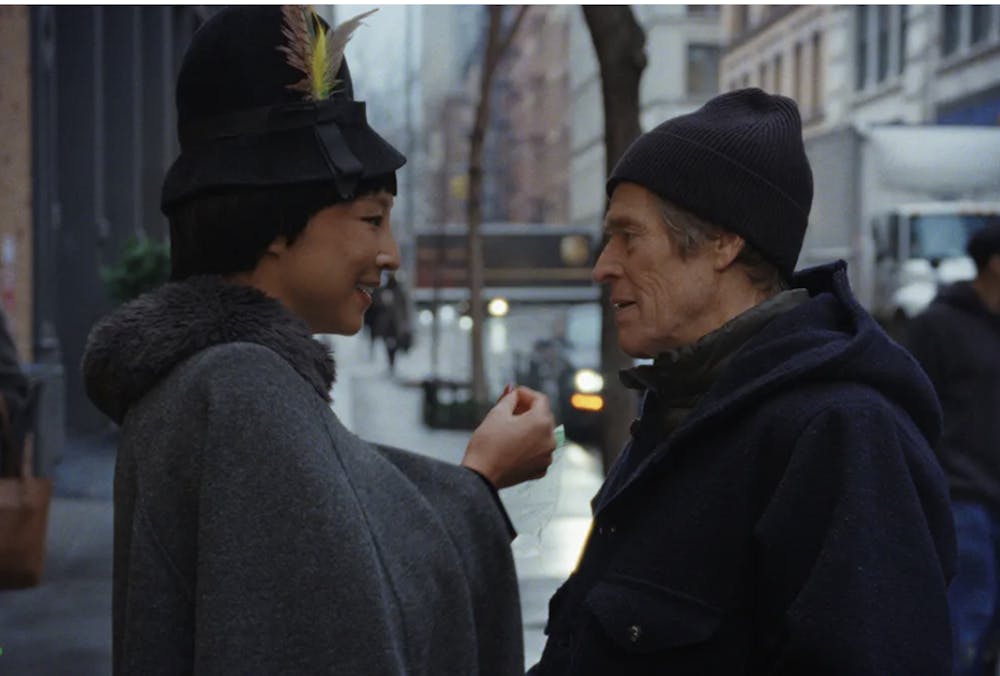
OPINION: Late Fame is Pretty Lame, Despite Defoe’s Best Efforts | Phoenix Film Festival
Similar Posts
- — Final day of the Japanese Film Festival of Arizona, a word on gratitude takes center stage
- — 3 takeaways from ASU’s first Big 12 loss
- — MUNA rocks Phoenix despite lineup change
- — Powers stays focused on upcoming season in first presser since Mayich collapse
- — Rams, favoritos al Super Bowl, sacuden el golpe de la Semana 1 y se recuperan ante los Giants