
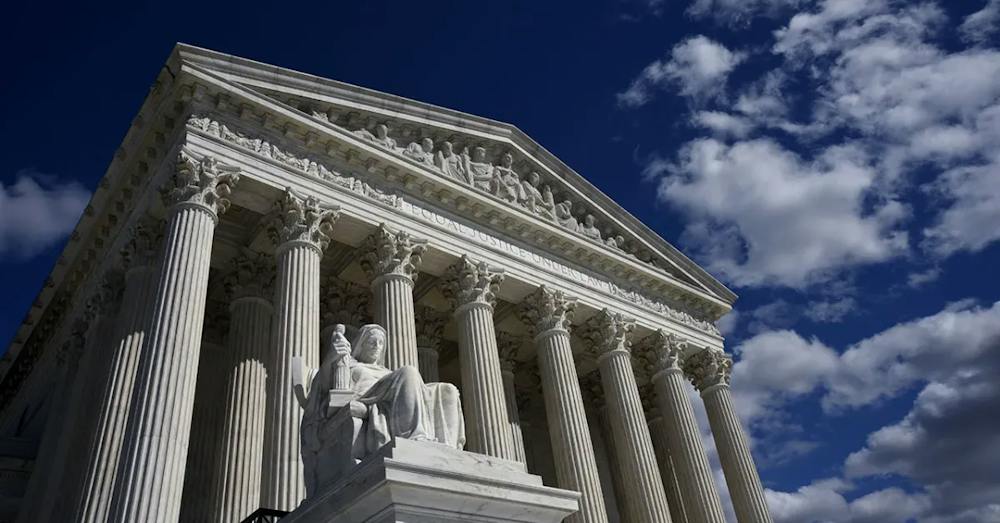
Photo Credit: Pew Research Center
In a 7-2 emergency ruling, the Supreme Court blocked President Donald Trump's executive order regarding mail-in ballot restrictions.
The executive order in question directed the U.S. Postal Service to add more regulations and guidelines to mail voting, addressing what the administration listed as “shocking vulnerabilities in our election infrastructure.” This would include ballot screening, utilizing specific types of ballot envelopes and marking those envelopes with identifiable barcodes. It would also require states to approve and list citizens permitted to vote via mail.
Following this order, numerous legal battles from blue states and voting rights activists questioned the constitutionality of this action. Officials in over 20 states voiced concerns about the possible overreach of executive power and the bypassing of Congress. A lawsuit, filed in Massachusetts against the Postal Service and led by the state attorneys general said, “the Rule violates the Constitution and federal statutes many times over… violates the Privacy Act, and cannot be reconciled with federal voting rights law." These reasons and more were among the accusations presented to the Supreme Court for examination and analysis.
Three weeks prior to the official ruling, on Aug. 24, the court initially delayed a decision on the issue.
Now we have their official stance.
An important aspect that influenced this ruling was timing. In a previous case, the Supreme Court addressed the idea of mail-in ballots, regarding the timing of the voting cutoff. Mississippi's five-day ballot grace period for voters was challenged by the Republican National Committee for altering the standard election-day timeline. The 5-4 ruling concluded that since election-day statutes do not specify when ballots are due, as long as mail votes are clearly postmarked before election day, they can be accepted within a grace period.
Through their ruling, the court put emphasis on the accessibility of voting for citizens and the importance timing can have on elections.
The new regulations around mail-in votes, if they had taken full effect, would have been applied just months before the midterm elections. Due to this fact, there were many concerns surrounding voter confusion and issues with accurate ballot submission or accessibility. Voting alterations so close to November would have required very quick preventive action by the states, especially since some, like North Carolina and Alabama, had already sent out their ballots.
These conversations have many critics and supporters, weighing in on the ruling. Gov. Gavin Newsom of California – one of the states involved in the lawsuit – commented Monday that, “today is a good day for democracy, the rule of law, and the American people looking to exercise their Constitutional right to vote.”
Several justices have even made statements explaining their opinions and votes, including Justice Brett Kavanaugh. He agreed with the decision of the court and suggested that regardless of the power of the Postal Service, election officials “do not have sufficient time to reasonably implement the rule before the November elections.”
The dissenters, Justices Samuel Alito and Clarence Thomas, believe that arguments against the executive order do not have legitimate legal grounds to take action against it.
Trump also shared his views, including criticism of the justices he appointed during his first term, Neil Gorsuch, Kavanaugh and Amy Coney Barrett. His recent Truth Social post read, “These are not the people I interviewed to serve on the United States Supreme Court…shockingly bad rulings that are of such magnitude that it won’t be easily possible for our Country to recover or heal.”
So... what does this mean?
With this rule being blocked, the option of mail-in voting is still on the table for the people who choose to utilize it. This avoids a possible dip in voter participation, as over 30% of voters submitted their ballots by mail in the last general election.
The ruling did not clarify whether the Postal Service has the authority to implement these requirements in general, only that applying them to the upcoming election is not permitted.