
AVONDALE, Ariz. – Arizona State University researchers have developed a web-based app that maps the coolest walkable route to help people manage the Arizona heat.
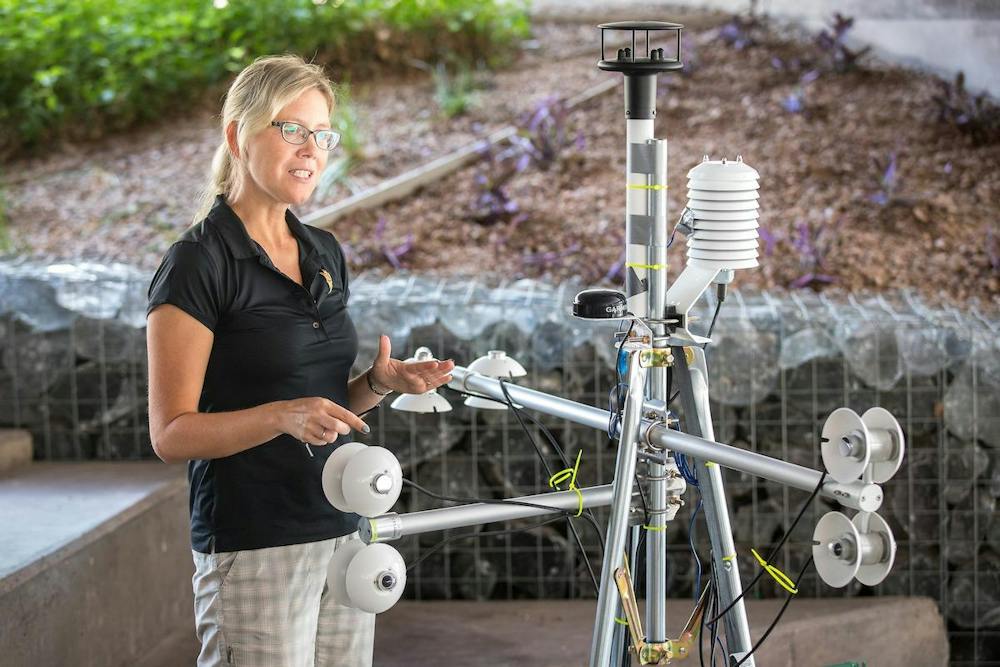
Ariane Middel, a research professor at ASU focused on urban climate, measured different shading at a human scale to see what other alternatives provide relief in the valley, as the Arizona sun beams down on millions of commuters.
Middel said the app is a real-time temperature heatmap that locates shaded routes in 70% of walking trips. Cool Routes maximizes the shade you experience on your walking route to manage heat exposure, helping Arizonans get from point A to B safely.
The city of Avondale is part of ASU’s Sustainable Cities Network steering committee, working alongside urban climate researchers to find solutions to improve the quality of life for urban communities.
“Imagine you’re in the valley you’re not familiar with, and all while in the sun,” Middel said. “This tool is helpful for that.”
As Avondale expands its neighborhoods, it mainly designs low-maintenance yards, rocks, small shrubs or paved walkways. Middel said those designs increase temperatures in residential areas.
Infrastructure challenges, such as being unable to plant a tree underground because of the underground sewer lines or power lines, limit natural shade. Researchers said they found alternatives that could provide shade without planting a tree.
“We need a suite of solutions; we can’t just focus on one,” said Middel.
Focusing on implementing shaded areas can help reduce heat exposure, which is important when considering the difference in people’s reactions to sun exposure compared to shaded areas, Middel said.
Avondale city designers can prioritize engineered shade structures for outdoor spaces where people are exposed to heat for extended periods of time, such as bus stops, as a long-term solution to manage heat exposure for Avondale residents, Middel said.
“Anything is better than being hit by direct sunlight,” said Middel.
Efforts to increase tree canopy shade to 25% in municipal cities across the valley by 2030 have stalled over the past five years, staying between 10% and 12% according to researchers.
Middel said they are nowhere close to the goal at the moment.
Avondale resident Daisy Nunez said she and her colleagues have nowhere to go when conducting business outreach for her job due to the lack of shade in business centers.
“We would have to be out in the scorching sun, and it was unbearable,” Nunez said.
Urban planner Cheng-Kai Hsu found studies in which he examined people's behavior and how they show some behavioral changes depending on the temperature that day.
Studies have found behavioral changes in driving, such as increased aggression, because of heat exposure, urban planner Hsu said.
Hsu said some ways cities can minimize carbon emissions include carpooling or commuting via the city metro, which can help reduce high temperatures.
Hsu said this is key to understanding how heat impacts human health outcomes and urban living.
Nunez said, “Arizona needs to prioritize shade in this heat, especially for summer.”