
PHOENIX– Terry Goddard, president of the Central Arizona Water Conservation District Board of Directors, calls the state of the Colorado River "depressing" and is suspicious of other states' involvement in a speech about the river.
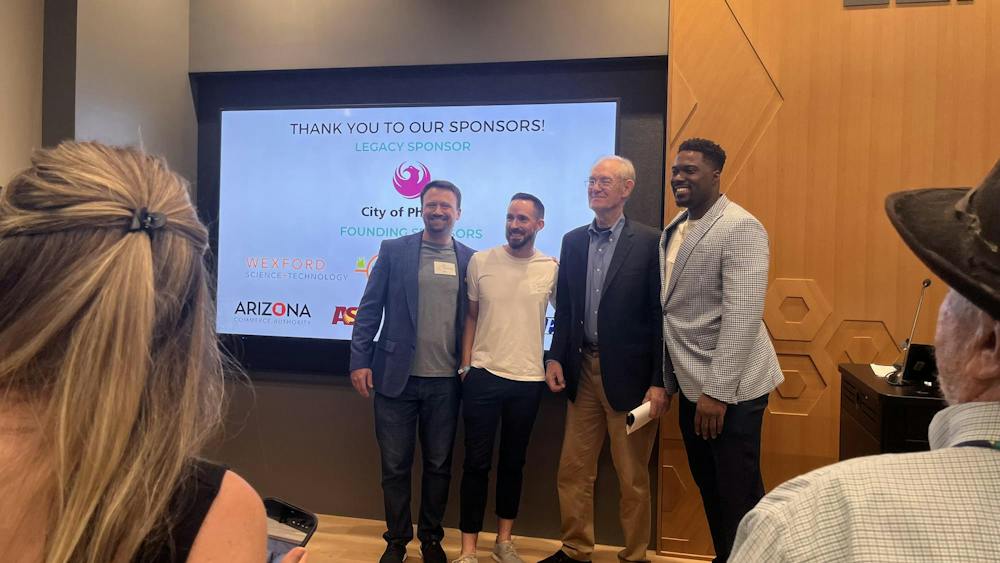
Venture Café Phoenix hosted Goddard for a conversational event titled The State of the Colorado River, where Goddard broke down water management decisions for the public on Sept. 10.
The Colorado Compact requires, by federal law, that upper basin states- Utah, Wyoming, New Mexico and Colorado- must release water to the lower basin states, Arizona, Nevada and California, as part of the agreement.
Goddard explained that the upper basin states don’t have to record the amount of water they use from the Colorado River, while every acre of water is measured as it passes to the lower basin states.
He also said he wasn’t “the biggest fan” of how the Arizona Legislature has been handling the issue.
“Nobody took the time, the effort, and the courage to say it's time for a big solution,” Goddard said. “It's time that Arizona looked to the future as they did in the past.”
During the presentation, Goddard illustrated how Arizonans joined the Colorado River water agreement in 1922 and how it’s remained unchanged since then.
He explained that the Colorado River water was split in half with 7.5 million acre-feet between the lower basin and the upper basin.
Goddard is a member of the Central Arizona Project initiative, which is responsible for delivering water to Central Phoenix.
The CAP has been meeting with other basin representatives once a week for the past two and a half years to reach a solution, but has yet to find one.
“We got nothing. The upper basin has taken the position that they're not going to release one gallon of water to the lower basin,” Goddard said. “That's been their position through the entire negotiation. We in the lower basin have put up a number of different solutions, all of which involve us taking very significant cuts.”
Carena Stewart, a community member attending the event, was concerned after hearing about the Colorado River water in the local news and wanted to learn more from someone who knows the topic firsthand.
“I haven't seen it at this scale, but I know it's something that Arizona's been fighting for a long time,” Stewart said.
The presentation finished with a Q&A session where members of the public could ask Goddard questions about water usage and future efforts.
Another community member, Michael Pumo, came to the event because he is very interested in the next steps to address the water problem in Arizona and left feeling relieved.
“It's not looking too good, but I think if it ever gets to a critical level, we have all that agriculture, so we have a buffer that we can really take initiative if there are actually legit water shortages,” Pumo said.
Goddard emphasized the need for Arizonans to learn about the water issues affecting them so that everyone can develop solutions rather than a select few.
“I think Arizonans have been blissfully ignorant, unfortunately, about where their water comes from, how it's produced, and what the various sources are,” Goddard said.
Since the speech, water uncertainty has remained high across the valley as Goddard insists that residents keep talking about the water crisis.